DISTRIBUTORS
Imajnet AI
Imajnet® AI for road and railways

Effortlessly geo-reference in 3D your entire network assets and perform condition assessments using imagery.

Ready-to-use AI models

All these models analyze images to enable proactive monitoring and comprehensive inventory management.

imajing AI model

Automated inventory of vertical road signs

Imajing’s artificial intelligence model detects and classifies directional signs and regulatory/police signs visible in the images. Using the Imajing mobile mapping systems, each detected sign is georeferenced and converted into a GIS object. The AI also provides estimated dimensions.

Optical Character Recognition (OCR) automatically extracts text, destinations, road numbers and other visible information, which is particularly useful for directional signs and non-standardized signs.

This information directly enriches the attributes of each object in order to create a structured, searchable and operational road-sign inventory for business teams.

The results and their visual documentation are centralized in imajnet, where they can be reviewed, checked and shared with maintenance teams, then exported to GIS tools and asset-management databases.

imajing AI model

Automated public lighting inventory

From surveys carried out with the IMAJING range of mobile mapping systems, imajnet AI detects and geolocates streetlights or lamp posts and their supports to create a structured GIS inventory of the public lighting network.

The data can be checked in imajnet, enriched, then exported to GIS and business tools. Successive surveys make it easier to keep the asset base up to date, plan maintenance, replace equipment and prepare energy renovation and LED upgrade programmes, optimising energy consumption and reducing operating costs.

imajing AI model

Automatic traffic light inventory

Select the area to process in your surveys, then run imajnet AI. Traffic lights are automatically detected, geolocated and added to a centralised GIS inventory in imajnet, where you can view them, edit them online and export them in various GIS formats.

Comparing surveys keeps the asset register up to date, identifies added, moved or removed equipment, and helps plan maintenance and interventions more effectively.

imajing AI model

Underground networks: detection of surface network fixtures

IMAJING’s automatic Manholes, gully inlets, gutters and valve boxes artificial intelligence models analyse surveys carried out with the IMAJING range of mobile mapping systems — IMAJING Capture, imajbox 3TX+ and imajbox 360HD — to detect and geolocate manholes, gully inlets, gratings, gutters and valve boxes. This equipment, visible at the surface, is automatically converted into GIS data ready to be integrated into business reference datasets.

This extraction makes it easier to maintain stormwater, sewer and drinking water networks. It gives teams a reliable location of access points, including the valve boxes used to operate on water networks, to prepare cleaning, inspection, repair or replacement work.

Precise knowledge of this equipment is also essential for road renovation projects. It helps anticipate the constraints of underground networks, prepare worksites, make interventions safer and avoid unnecessary rework.

Surface detections can also be combined with shapefiles and other vector layers representing water and sewer networks. Overlaid on the images in augmented reality, this data lets you view, within a single platform, both the equipment visible at the surface and the elements located underground.

The data can be checked in imajnet, completed, then exported to GIS software. Successive surveys then keep the inventory up to date and reveal new or moved equipment, as well as equipment that has become difficult to access.

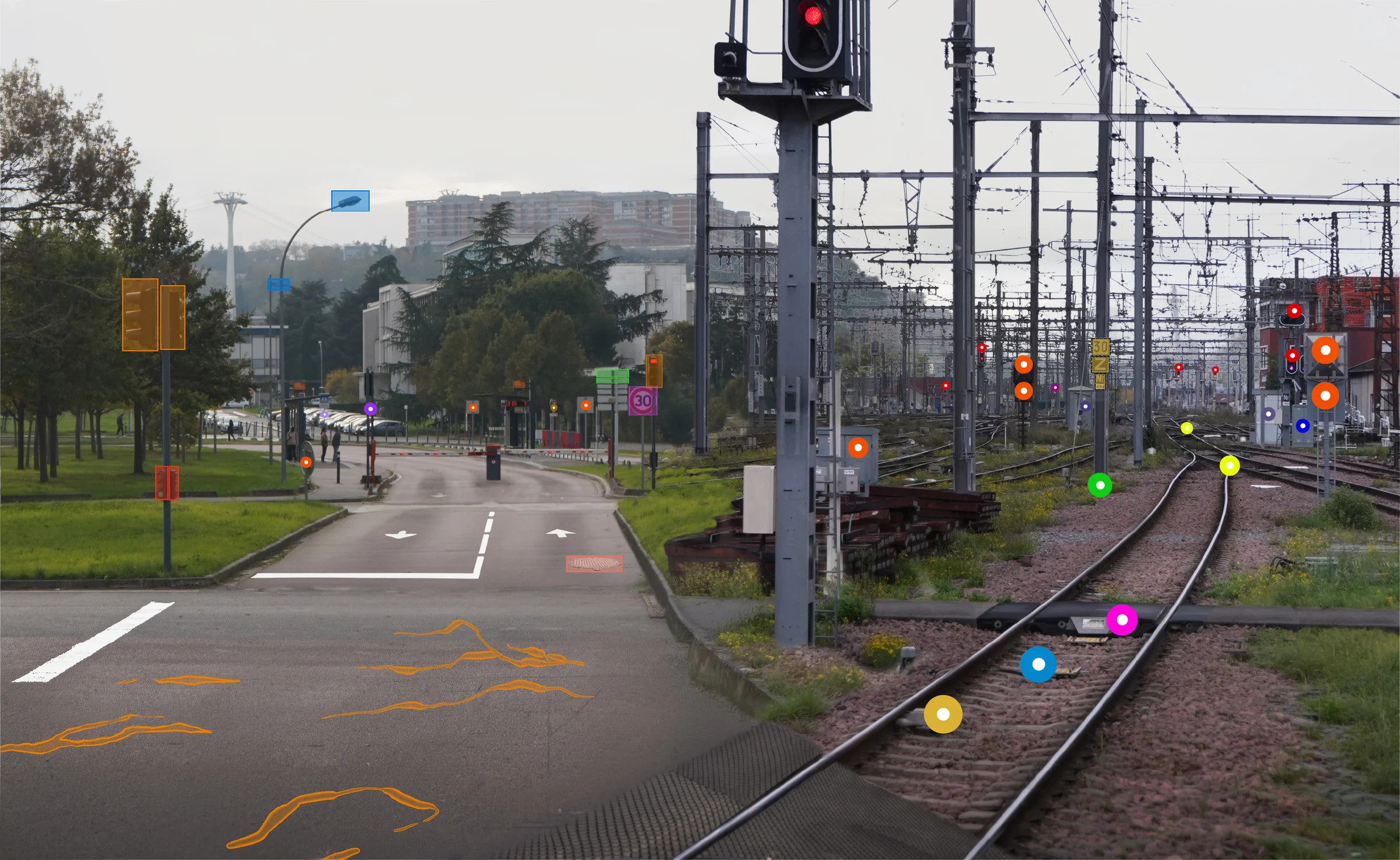
imajing AI model

Automated mapping of horizontal markings

The imajnet artificial intelligence model uses georeferenced images to accurately detect, classify and map the road network’s horizontal markings in five colours. It automatically builds a consistent geographic inventory, without any additional manual survey.

Simply select the area to process in your surveys, then run imajnet AI. The results are displayed directly in imajnet and can be checked, corrected and exported as GIS layers, then integrated into your business tools or into GIS such as QGIS and ArcGIS.

Mapping the existing markings also provides a reliable basis for urban planning ahead of works. It makes it easier to study future layouts, anticipate traffic changes and decide which markings to keep, move, renew or create.

imajing AI model

Automated pavement distress analysis

Imajnet’s pavement condition analysis model uses georeferenced images to detect, classify and map the main types of distress: repaired or unrepaired cracks, alligator cracking, ravelling and potholes.

Simply select the area to process in your surveys, then run imajnet AI with ease.

Integrated into imajnet, the model centralises the results in a single environment and makes them easy to view, edit and share between teams. Successive surveys rely on a consistent, reproducible method, ensuring reliable monitoring of how the pavement evolves over time.

This automation reduces manual inspections and field trips, saving time, making large networks manageable, keeping costs under control and helping prioritise interventions.

BLURRING & PRIVACY

Privacy protection of personal data is key.

imajing AI allows you to blur individuals and license plates automatically with different visual results according to your regulation.

BLURRING & PRIVACY

Automatic image anonymisation

IMAJING’s model automatically protects privacy by detecting and blurring the faces and licence plates present in surveys. Designed to process large volumes of images, it allows local authorities, network managers and large organisations to produce data with confidence, while ensuring compliance with privacy regulations.

This anonymisation is mandatory under the GDPR, in accordance with Articles 4, 5 and 25 of Regulation (EU) 2016/679.

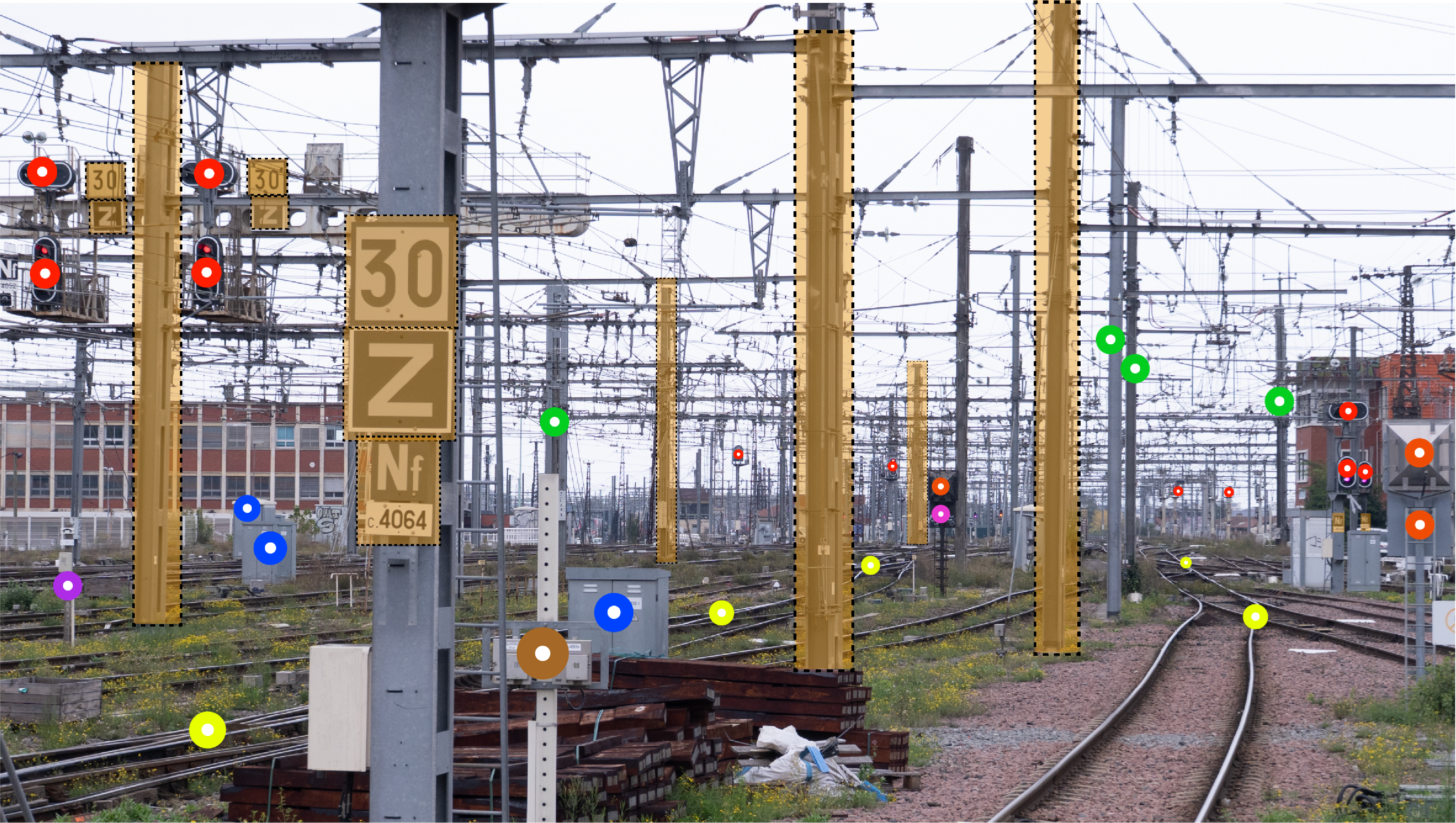
Imajing’s AI models for railways automatically detect and georeference trackside equipment in both geographical and linear coordinates.

INTEGRATION WITHIN ONE WEB PLATFORM

All surveys, and automatic or human object detections will be displayed on the map of the SaaS imajnet® Gecko platform.

all-for-imagery-IA-services-automated-analysis-mobile-mapping-to-GIS-roadways-railways-networks

HOW EASY IS THE WORKFLOW?

  1. Upload your own data

  2. Process

    Select the extent from the map, select the timeframe.

    Select the model you want to apply on your data.

    Run imajing AI models.

  3. Results within 48h*

    Each object consolidated from detections is represented as a GIS object with a unique ID. All objects can be annotated, they are shareable with your teams, you can also complete them with photos or any external document (photos, pdf, etc.).

    *Varying with the data volume.

  4. Review, share & export

    Complete or correct the detection results. You can review them online (imajnet® Gecko). When you are satisfied with your inventory, you can export the results as CSV, KML, Geopackage or Shapefile for use in your own tools.

    Or consume your results on the platform via a WFS connection.

Our imajing AI models will allow you to carry out a precise and classified automated inventory of your road or rail infrastructure. Your object detections will be displayed on the map of the geospatial web platform imajnet® Gecko.

With time, the state of all road or rail assets changes. imajing AI makes your life easier by giving you up-to-date information on the condition of your assets. Change detection is available for regular surveys and each survey enables automated updating.

Any unknown detected equipment will be inserted into the database as a new entity. Conversely, all known equipment will just be confirmed as being present at the time of your survey.

The imajnet® Gecko filter system allows a focused analysis by theme covering any business sector involved in the maintenance process.

All AI results can be exported in GIS format.

Embark on an AI-enhanced road inspection initiative by filling out the project description form.

Do the models work in any country?

We have generic detection models that work anywhere: e.g. poles, streetlights, signs, manholes, etc.

We have country-specific classification models:
e.g. every sign of a country, all varieties of poles, all types of streetlights.

I can’t find the AI model that suits me

We can train our models for detection and classification of any object you want.

We just need a large corpus of images (surveys) to build the training data set. And a label name for each of the categories you want.